
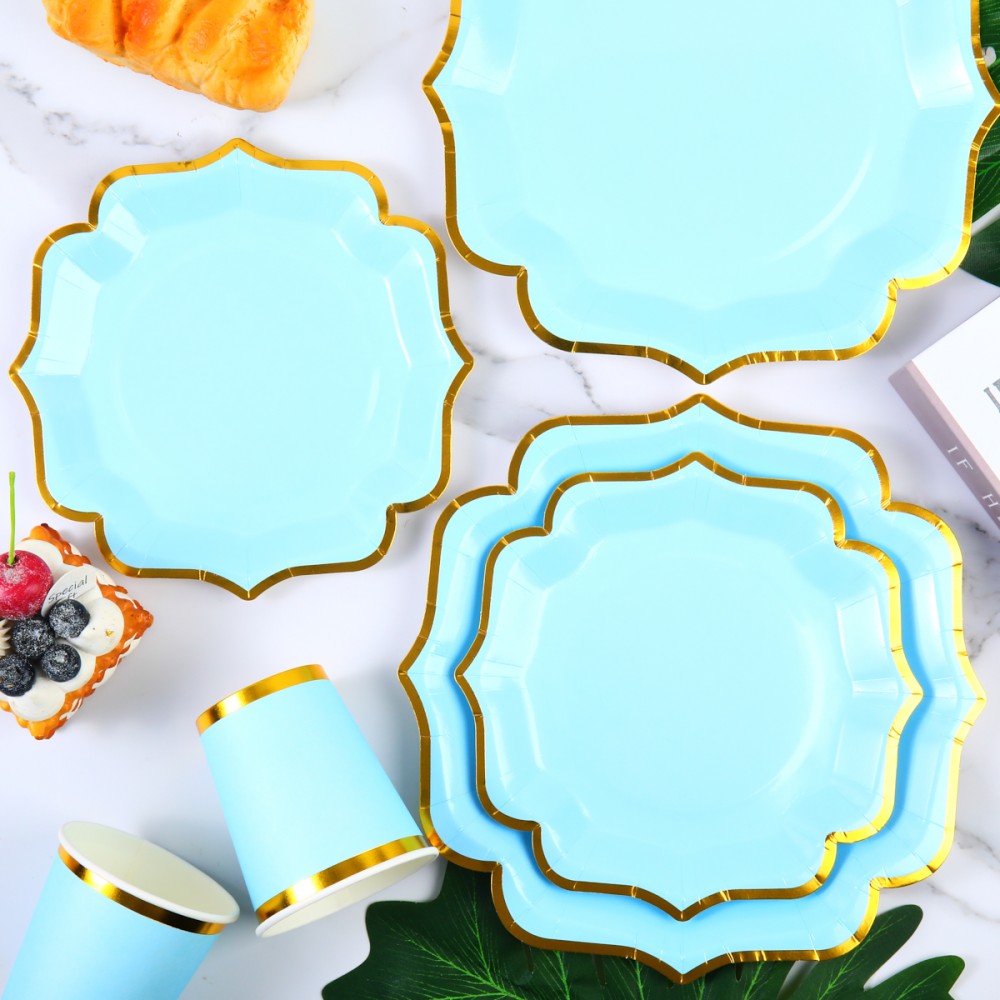
Gold Rim Plate Samples: Mark the Border Reference
Approve an irregular party plate border using a marked reference for its shape, position and visible continuity on the selected sample. Identify the viewing orientation and compare the complete perimeter, with detail photographs where needed. Keep colour and appearance observations separate from material, adhesion or use-performance claims; a reflective gold coloured image does not establish those properties.
The lake blue catalogue design combines an irregular plate outline with a contrasting gold coloured border. A general comment that the sample looks right does not explain which boundary or appearance the buyer accepted. This guide develops a visual border reference for that design. It does not prescribe manufacturing tolerances, a finishing process or product suitability for particular serving conditions.
1. Identify the exact plate reference
Start with the product design, selected plate size description and physical sample identifier. If the proposed set includes more than one plate size, keep each size identifiable in the appearance record. Do not assume that a border reference on one plate automatically describes how the design should appear on another size.
Retain the supplier’s catalogue image beside the selected sample record. Use it to identify the intended look rather than to derive a dimensional tolerance. If the buyer asks for a changed border or colour arrangement, keep that request distinguishable from the existing catalogue design until the supplier confirms the proposed version.
Official catalogue reference: lake blue irregular tableware reference.
2. Mark the outline and border position
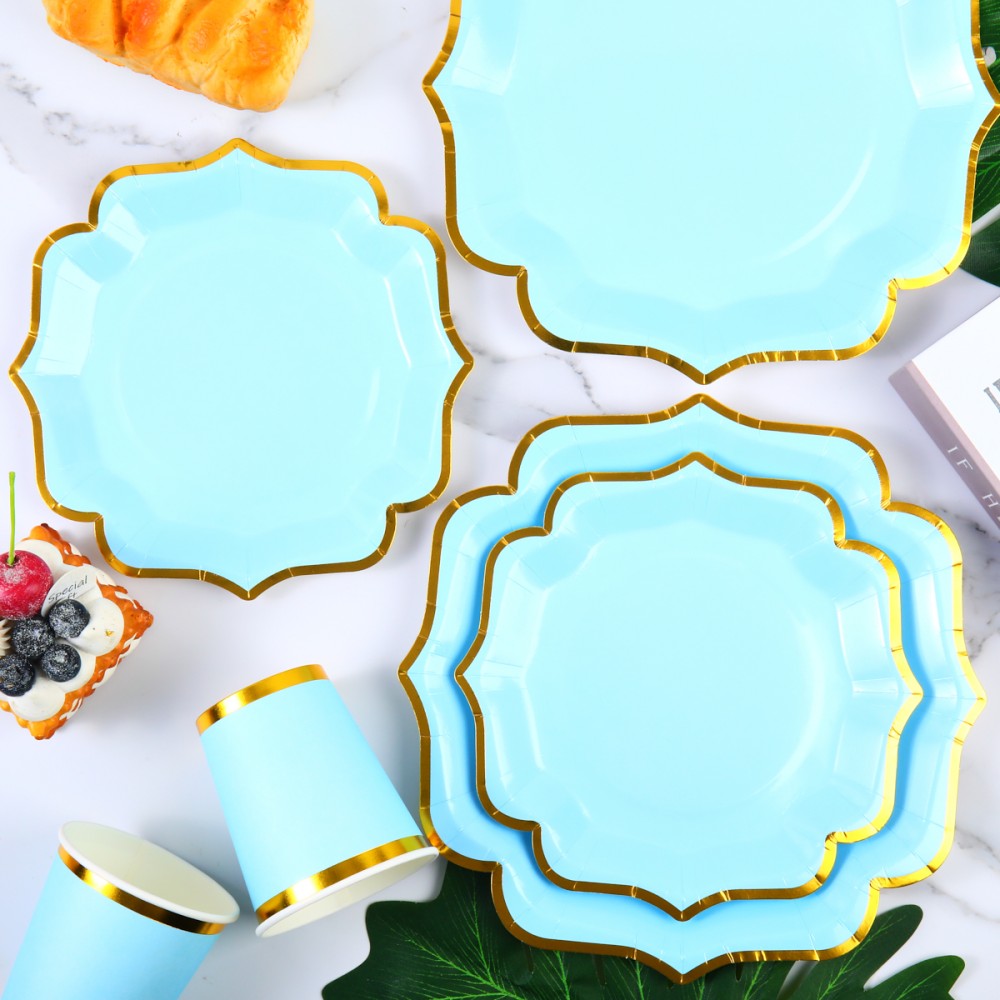
Choose a consistent orientation for the plate photograph and mark the area being reviewed. On an irregular outline, identify the points where the perimeter changes direction so both parties can refer to the same location. Ask the supplier which visible edge or reference should be used when discussing the border position.
Avoid treating the screen image as a scaled drawing. If a border width or position requires a numerical specification, request a defined measurement method and agreed reference from the supplier. Do not invent an acceptance range from a photograph or assume that a curved section should be measured in the same way as a straight section.
- Identify the design, plate version and sample.
- Mark the viewing orientation and outline reference points.
- Review the entire visible border with required detail views.
- Keep appearance acceptance separate from performance claims.
3. Review the complete perimeter
Request a full face view and the detail views needed to discuss the visible border around the selected plate. Mark any area that needs explanation, such as a difference in continuity, alignment or colour appearance. Record the actual observation without assigning an unagreed defect grade or claiming a particular production cause.
Keep the reverse or hidden areas pending if they have not been supplied for review. A front photograph cannot establish their appearance. The purpose is a shared visual record of the selected item, not a conclusion about how every plate is manufactured or how the finished surface performs in handling or service.
| Appearance field | Reference to retain | Question still separate |
|---|---|---|
| Outline | Oriented full face view | Unprovided dimensions |
| Border position | Marked areas and any agreed method | Assumed tolerances |
| Colour relationship | Physical sample and viewing reference | Material composition |
| Decision | Dated acceptance or requested changes | Unperformed use or durability evaluation |
4. Compare colour under a shared reference
Reflective borders can look different across lighting and screen conditions. Agree the physical appearance reference and the viewing arrangement needed for the buyer’s comparison. Keep the lake blue area and the contrasting border as separately named appearance fields so a comment about one is not mistaken for a change to the other.
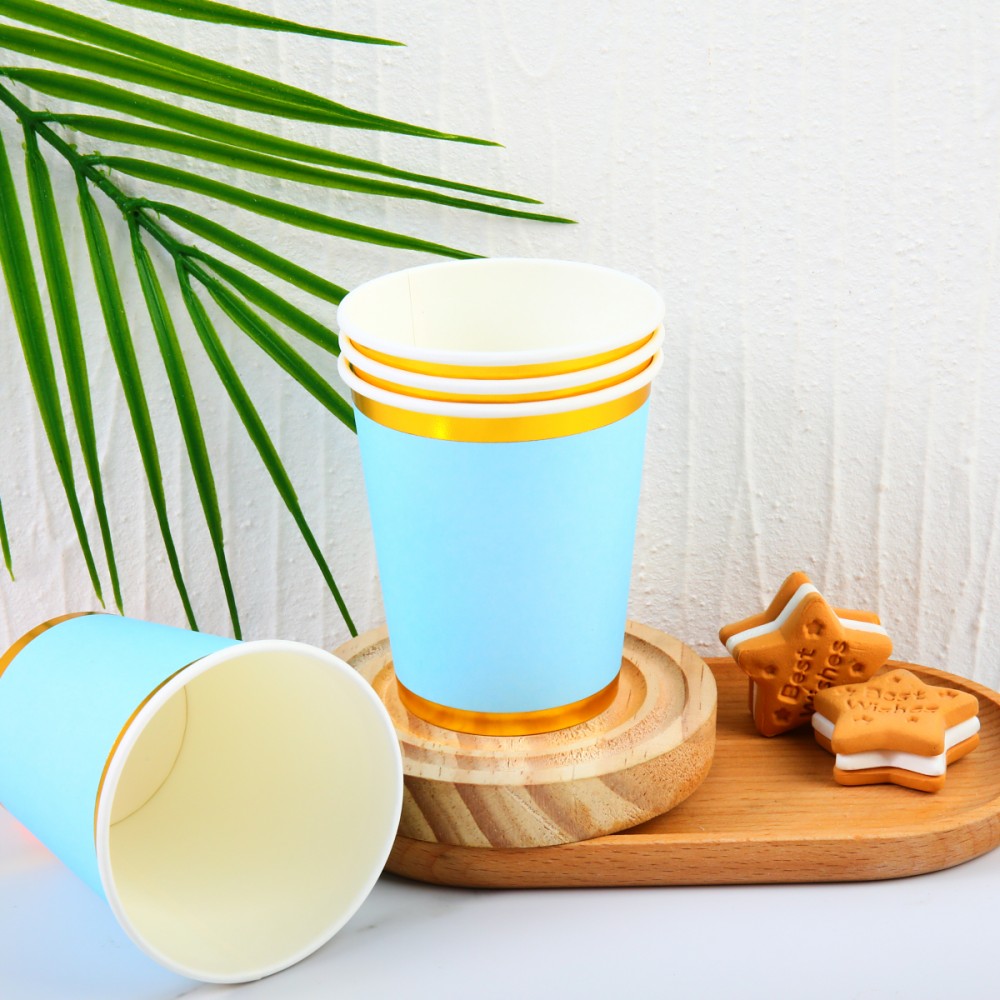
The catalogue also shows cups coordinated with the plate design. Review their intended colour relationship as a separate component reference where relevant. A matching event presentation does not prove identical materials, manufacturing steps or performance across the plates and cups, so those questions should remain outside a visual colour approval.
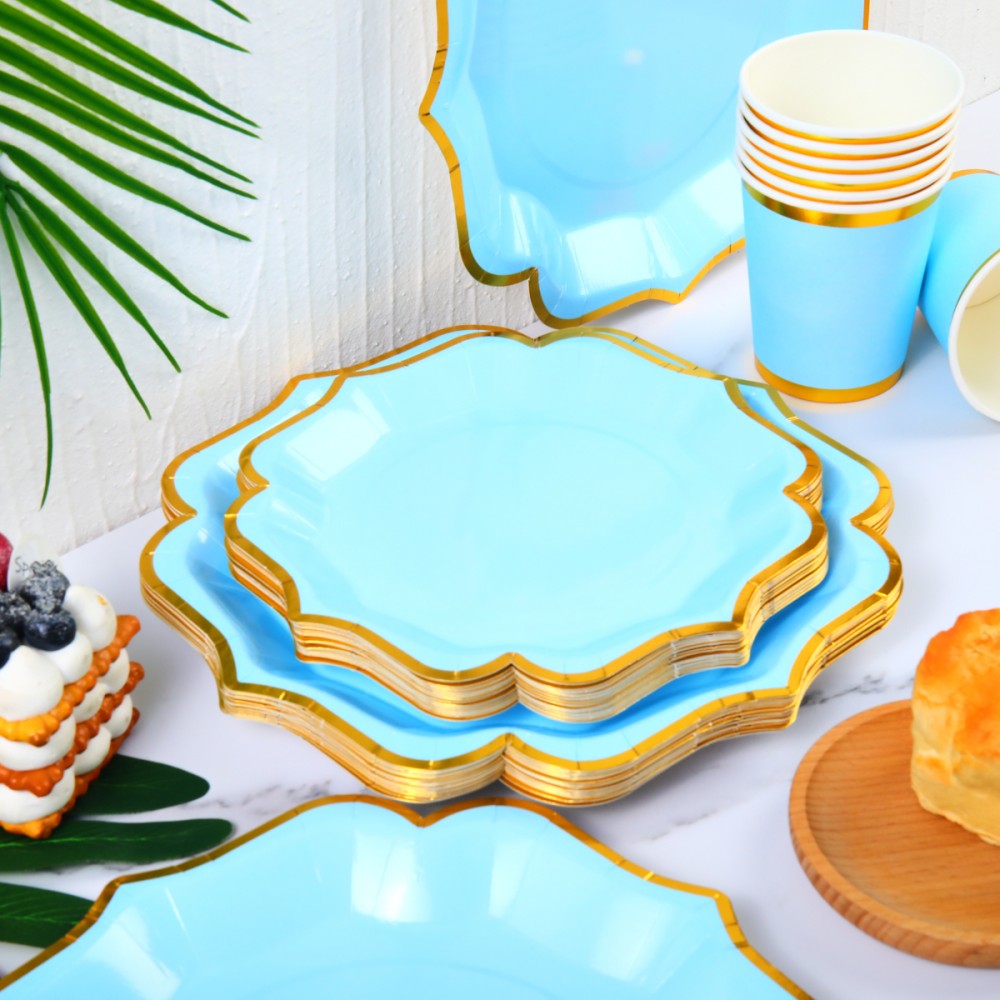
5. Retain a dated appearance decision
State whether the selected sample is accepted, needs listed changes or requires another submission. Keep the sample identifier, marked views and any agreed appearance specification under the same revision. A later reviewer should be able to identify the area and observation concerned without relying on an informal phrase such as the rim is different.
Before ordering, ask the supplier to acknowledge the accepted design reference for each selected plate version. Keep any requested material or use-related information in separate documentation fields. An appearance approval records the chosen border presentation; it does not establish surface durability, food-contact suitability, environmental claims or a completed performance evaluation.
Frequently Asked Questions
Can a catalogue photo set the border tolerance?
No. Use it as an appearance reference. A numerical requirement needs an agreed definition and measurement method rather than a value estimated from screen pixels.
Does a gold coloured rim establish real gold content?
No material composition follows from its appearance. Ask the supplier for the product-specific information relevant to the order and keep it distinct from the visual reference.
Can one plate approve the cups as well?
Identify the scope of each decision. Coordinated colours can be compared visually, but different components still require their own confirmed references and any separate product information.
For a product-specific enquiry, lake blue irregular tableware reference is the catalogue starting point. Read the supplier blog and contact the supplier with the references and open questions described above.