
Party Tableware RFQs: Count Each Set Component
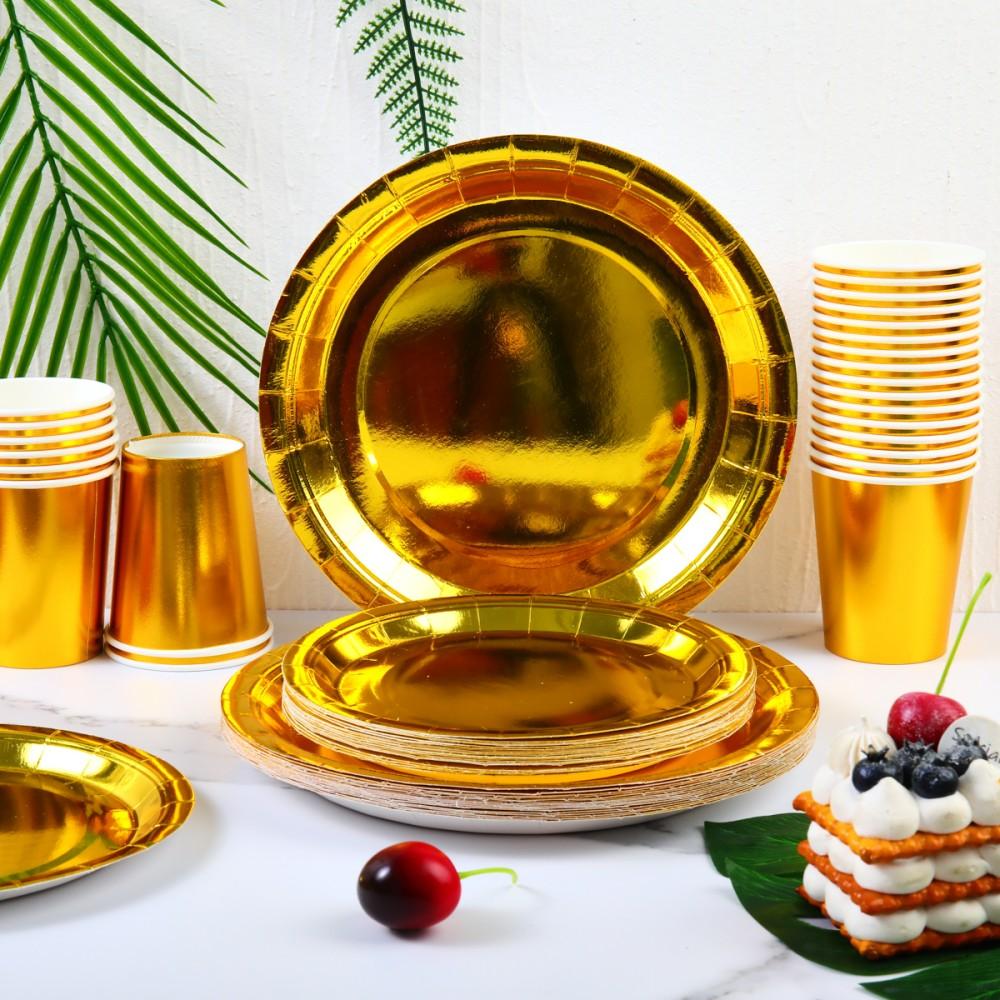
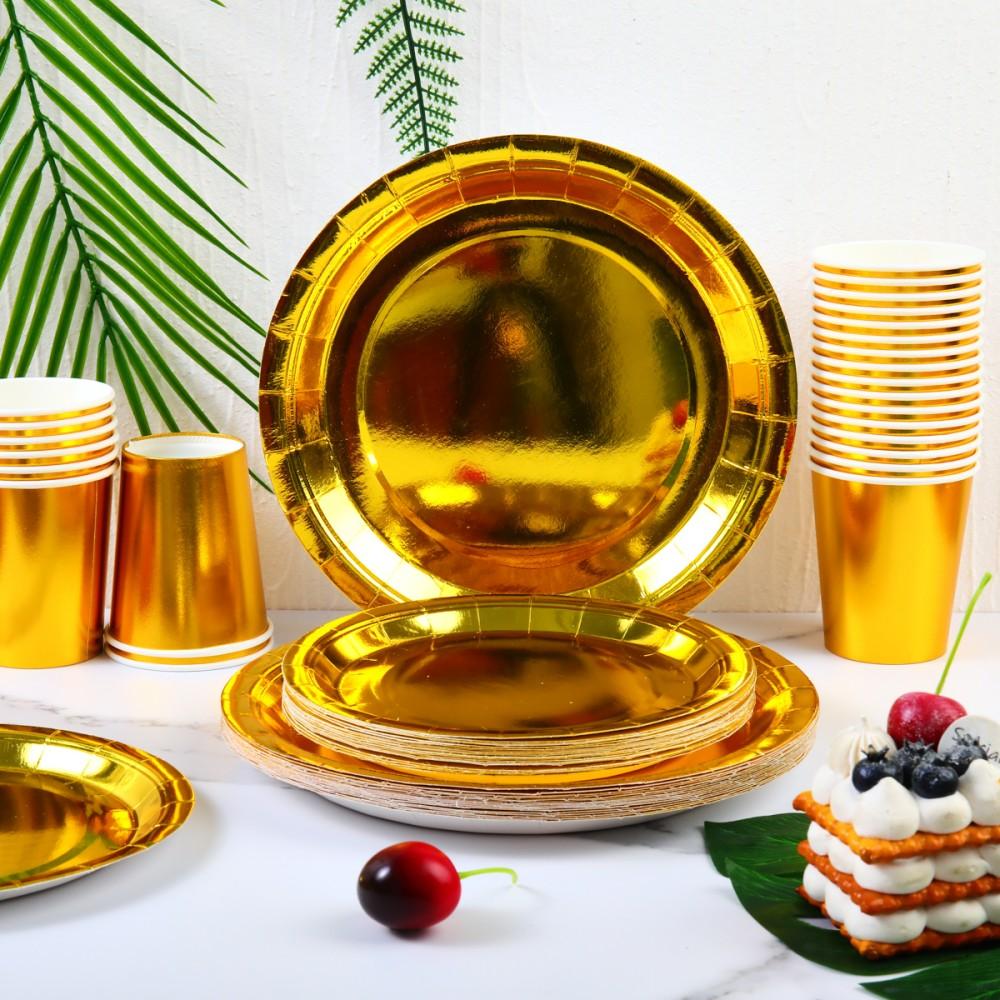
Define a party tableware set by listing each included component and its quantity, then state whether the quotation unit is an individual item, a complete set or another defined pack. Keep plate sizes, cups and napkins on separate lines. A styled catalogue arrangement cannot establish the supplied counts, guest coverage or inclusion of the props shown beside the tableware.
A product page may call an assortment a set while its photographs show stacked plates and cups in an event arrangement. A buyer still needs to know what one quoted unit contains. This guide turns the selection into a component-count schedule. It does not promise stock availability, price savings or product suitability for unverified food or beverage conditions.
1. Identify the selected design before counting
Use the exact tableware design reference and the supplier’s proposed version. The shiny gold listing names plates, cups and napkins in its specification fields. Retain those as component categories to clarify, rather than treating the visible stacks in the photograph as the complete contents of the commercial offer.
Give the selected set a buyer reference and keep the product URL with it. If the supplier offers several pack options under the same design, ask which option is being quoted. A design name can remain unchanged while the contents or pack quantity differs, so both the design and the commercial configuration need identification.
Official catalogue reference: shiny gold tableware set reference.
2. Count each component on its own line
List the selected plate sizes separately from cups and napkins. Ask the supplier to enter the number of each component included in the proposed set. An unanswered component field should stay pending rather than being filled from the number of visible items in a decorative image or from another supplier’s familiar pack arrangement.
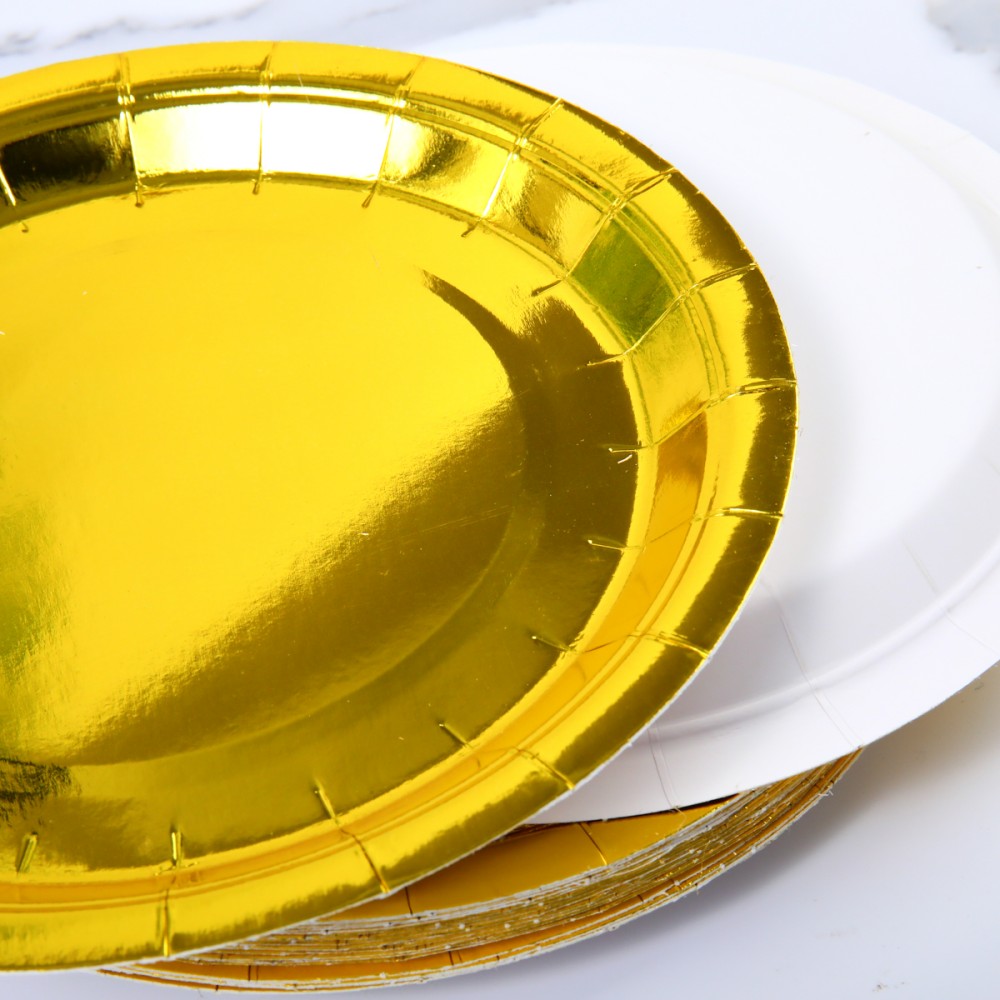
Keep the component description precise enough to distinguish the items. A general plate line can hide a difference between the two plate sizes named in the catalogue. Use the supplier’s confirmed size description or item reference for each line, while leaving actual dimensions and measurement definitions to their own specification fields.

- Identify the design and proposed pack option.
- Separate plate sizes, cups and napkins into component lines.
- Ask for confirmed quantities rather than counting photographed stacks.
- Keep complete set count distinct from component piece totals.
3. State the commercial quantity unit
Ask whether the quoted quantity refers to individual complete sets, separate components or another expressly defined pack. Repeat that unit beside the requested quantity. A value labelled pieces can otherwise be interpreted as the total of all plates and cups or as the count of complete saleable sets.
If the buyer orders complete sets, show the set count separately from the component totals inside those sets. If individual components are wanted instead, make that scope explicit. Do not assume that a supplier offers every component separately; ask for confirmation of the proposed order scope and keep any alternative offer distinguishable.
| Schedule line | Supplier response needed | Keep separate |
|---|---|---|
| Plate reference A | Included count and size identity | Another plate size |
| Plate reference B | Included count and size identity | A general total plate count |
| Cup or napkin | Component identity and included count | Unanswered inclusions |
| Commercial unit | Set or other defined quantity basis | The total number of component pieces |
4. Reconcile the schedule against the offer
Compare the supplier’s response with the original component list and mark differences line by line. Ask whether an omitted component is excluded, optional or simply unanswered. Keep a proposed substitute size or design on an alternative line so it cannot silently replace the requested contents while the total pack quantity stays the same.
The table below is a framework for the enquiry, not a statement of standard quantities. Obtain the actual component counts from the supplier. Keep the merchandise schedule separate from decorative props, food and other items visible in the images. Their presence supports presentation photography, not a claim that they are supplied in the set.
5. Link the contents reference to later review
Retain the acknowledged component schedule with its date or revision and the selected design reference. Use the same identifiers when requesting samples or packing information. A sample can then be checked against a defined commercial configuration instead of being described only as the gold set shown on the website.
Before ordering, resolve the quantity unit and any remaining inclusion questions directly with the supplier. Minimum quantity, commercial terms and timing need their own current response. The completed schedule establishes what is requested and offered; appearance approval, packaging review and any product-specific documentation remain separate decisions rather than assumed results.
Frequently Asked Questions
Does the photograph establish the number of cups supplied?
No. It is a presentation reference. Ask the supplier to state the actual cup count for the proposed set or pack option on the quotation schedule.
Can a set count be compared with a component piece count?
First convert the offers to the same explicitly defined basis using confirmed contents. A shared number alone does not make two differently defined offers comparable.
Does the set automatically include the decorative props?
Do not assume so. Identify the merchandise being quoted and ask for any requested additional component to be listed explicitly. Food and styling props are not established inclusions.
For a product-specific enquiry, shiny gold tableware set reference is the catalogue starting point. Read the supplier blog and contact the supplier with the references and open questions described above.