
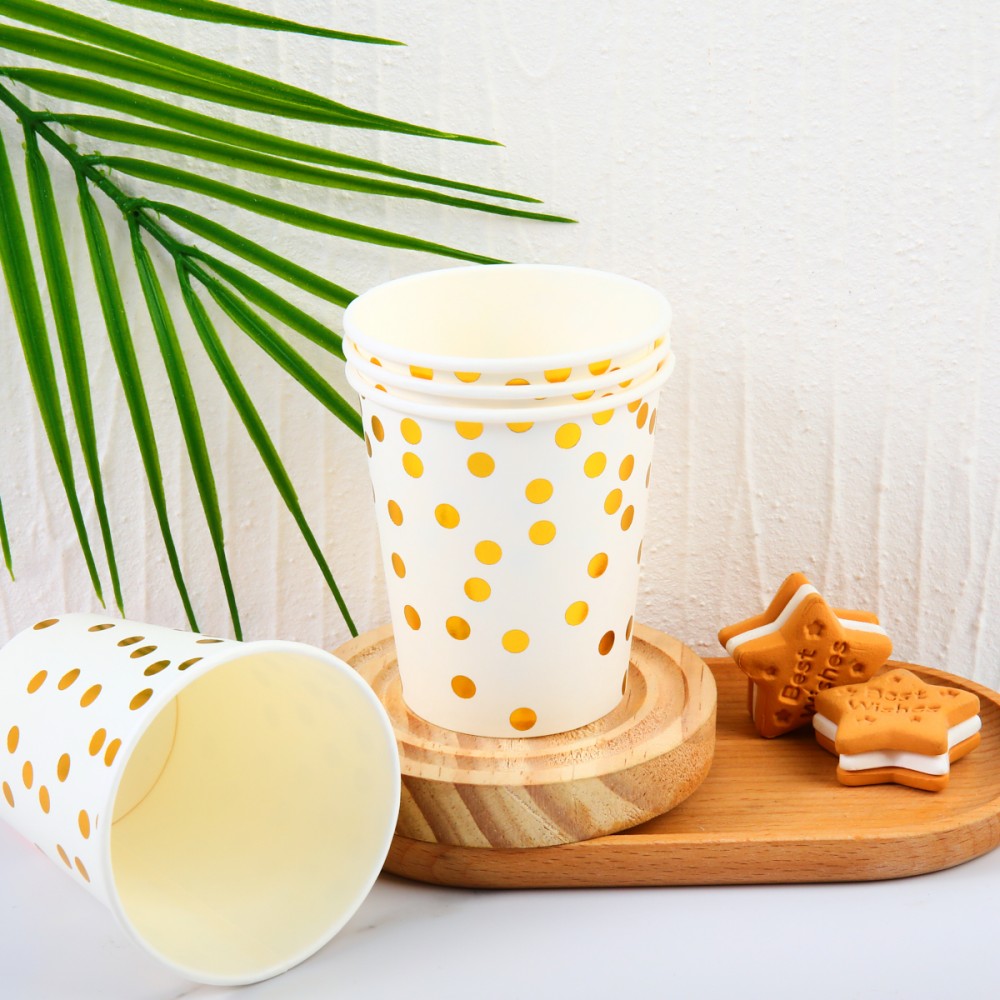
Tableware Size Sheets: Separate Cups and Plates
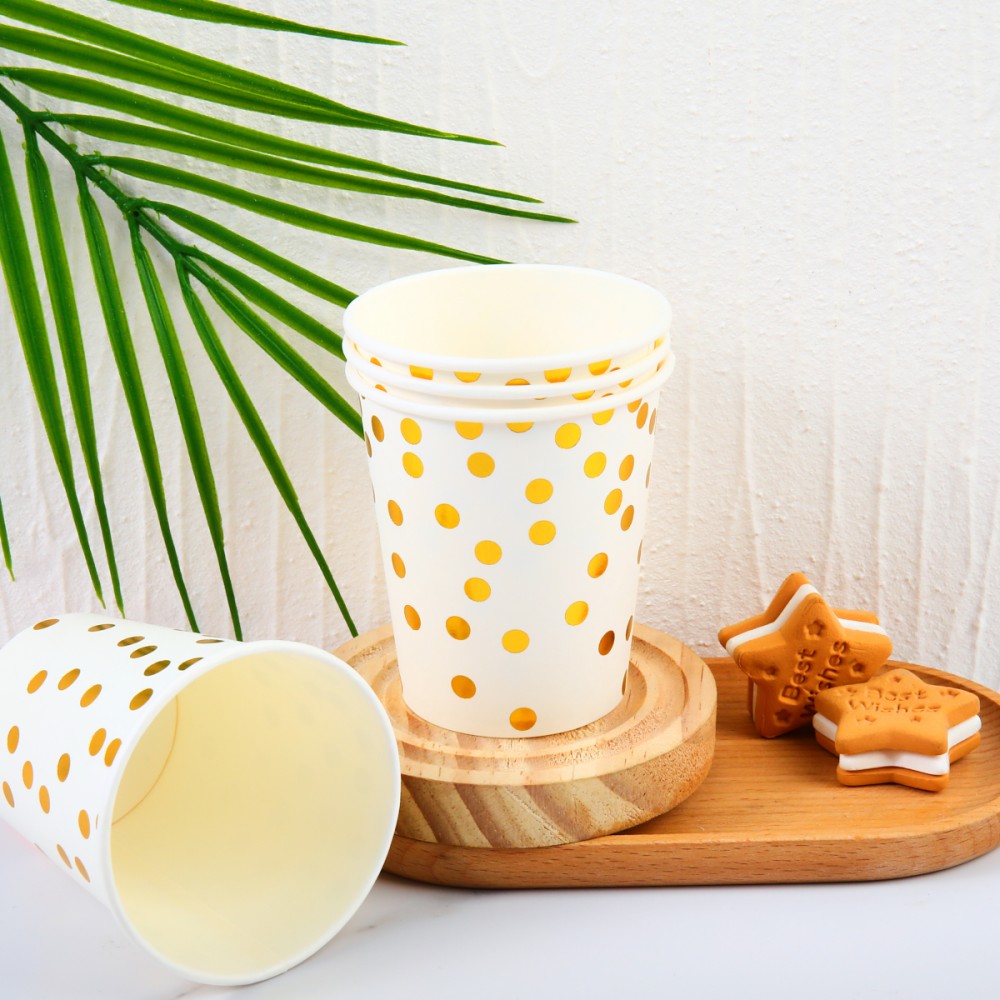
Request a separate dimension record for each tableware component. Name cup height and relevant rim or base diameters, define the plate boundary being measured and clarify whether napkin dimensions describe a folded or unfolded state. Ask the supplier to explain any run-together dimension string rather than guessing its order, units or relationship to the proposed set.
A party tableware page can combine plate sizes, a compact cup dimension string and a napkin measurement in one specification block. Those fields do not all describe the same geometry. A purchasing team comparing white and gold dot set components needs a labelled size sheet. This guide concerns how dimensions are defined, rather than prescribing serving capacity or approving material performance.
1. Give every component its own identity
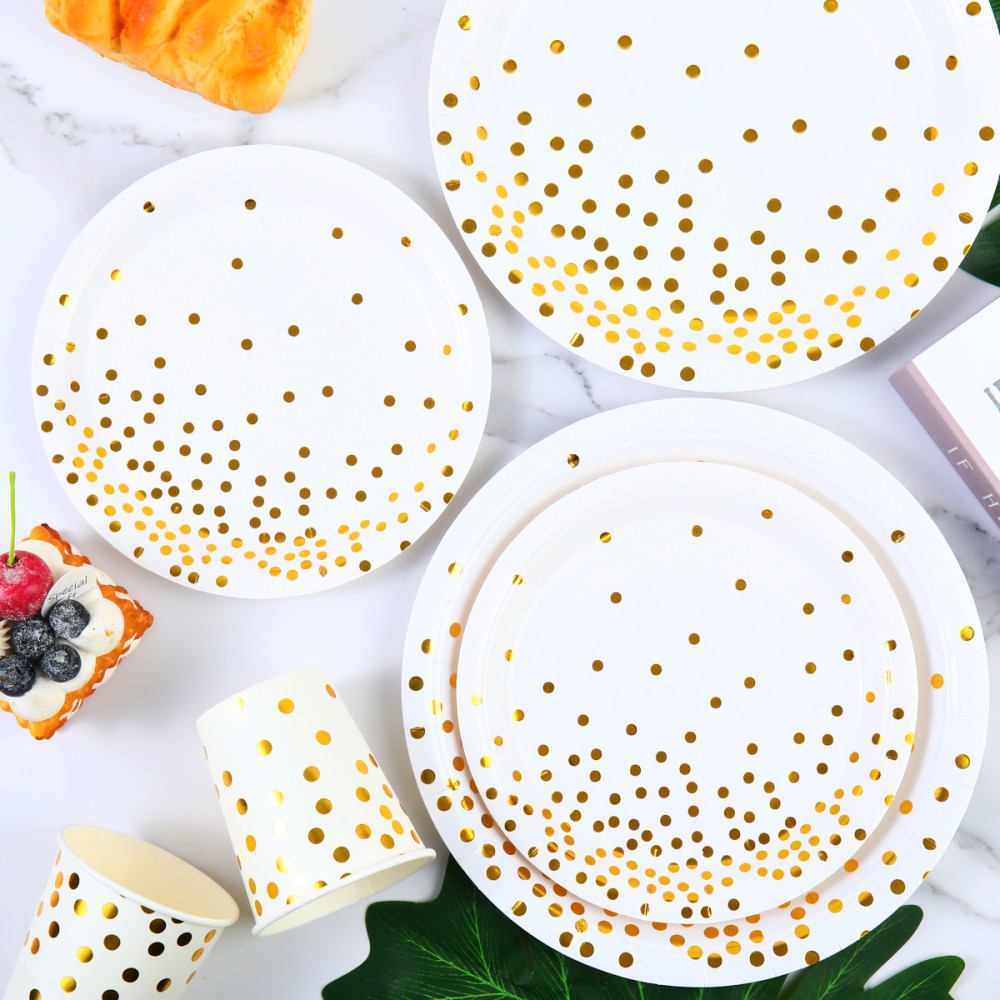
List the plate references, cup and napkin separately on the proposed specification sheet. The selected white and gold dot catalogue page names those component types. Ask the supplier which exact item each returned dimension covers, especially when more than one plate size or pack version is available under the same overall design.
Keep the component identity linked to the selected set reference without combining all values into one size field. A complete set has several merchandise components, while each component needs its own measurement definition. A shared decorative pattern cannot make a cup dimension interchangeable with a plate dimension or establish the contents of a particular pack.
Official catalogue reference: white and gold dot tableware reference.
2. Ask the supplier to unpack the cup string
If the catalogue presents cup dimensions without clear separators, request a labelled explanation rather than dividing the characters into plausible values. Ask which entries describe the height, upper opening or base and what units apply. The supplier should identify the boundaries and order of those fields for the exact cup being offered.
Keep external dimensions distinct from any stated capacity. A set of outside measurements does not itself establish a confirmed usable volume or serving requirement. Where capacity matters to the purchasing brief, request its definition and product-specific information separately instead of calculating and publishing a precise claim from incomplete dimensions.
- Identify each plate, cup and napkin reference separately.
- Ask for labelled cup dimension fields and units.
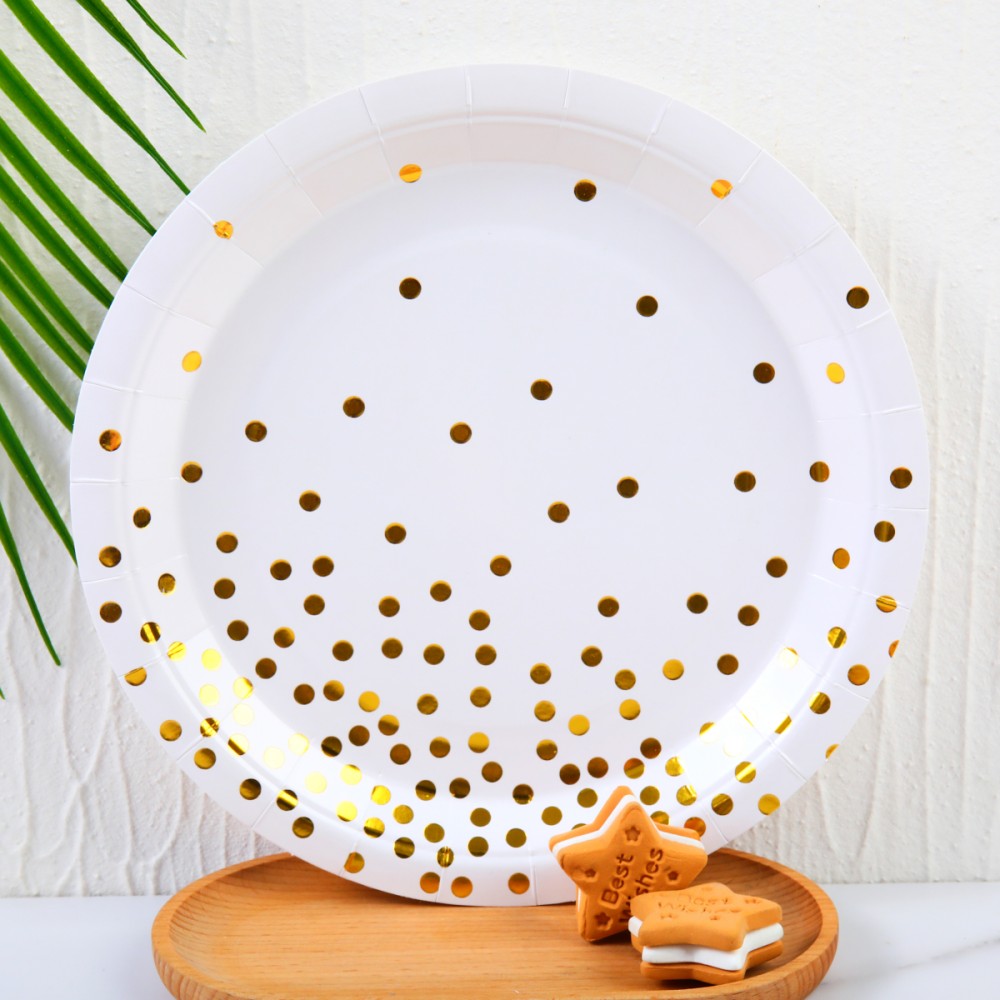
- Define the plate boundary and span endpoints.
- State whether the napkin is measured folded or unfolded.
3. Define the plate boundary being measured
Ask whether the plate dimension refers to the outer boundary, an inner reference or another expressly defined span. Retain an annotated drawing or sample view that shows the endpoints. A plate described by a nominal size still needs clarification when the buyer is comparing its dimensions with another item or a proposed pack.
For a round plate, keep the named diameter reference clear; for another outline, ask how the specified span is defined. Do not measure an angled catalogue photograph or treat a decorative band as the measurement boundary without confirmation. The relevant order specification should state the actual method and any separately agreed acceptance requirement.
| Component | Measurement definition | Do not substitute |
|---|---|---|
| Cup | Named height and diameter references | An undecoded compact number string |
| Plate | Boundary and span endpoints | An angled image or an unconfirmed nominal label |
| Napkin | Folded or unfolded state and orientation | Assumed fold or layer count |
| Specification record | Confirmed values, units and revision | Unagreed tolerance or serving capacity |
4. Clarify the napkin measurement state
Ask whether the napkin dimensions refer to the folded item, the unfolded sheet or another supplied presentation. Identify the orientation and units on the returned sheet. A fold can change the outside dimensions without changing the original sheet, so a size value alone may not explain the merchandise being compared.
Request the relevant sample or drawing when that distinction affects selection or packaging. Do not infer the number of folds, material layers or included quantity from the size string. Those are separate fields to confirm for the actual component rather than extra conclusions that follow from a single pair of dimensions.
5. Retain the agreed method with the values
Use a comparison sheet with columns for component reference, measurement name, endpoints or state, units and supplier confirmation. Keep unanswered fields visible. If a returned value differs from an earlier catalogue description, ask the supplier to reconcile the difference and identify the document revision applicable to the proposed offer.
Before ordering, retain the accepted component size sheet with the selected design and any physical reference used for comparison. Keep the dimensions separate from set counts, decorative approval and use-related documentation. This creates a repeatable purchasing record without inventing a tolerance, capacity, food-contact claim or environmental statement from the appearance of the products.
Frequently Asked Questions
Can an ambiguous cup string be split by guesswork?
Ask the supplier to label the fields and units for the selected component. Plausible-looking numbers do not establish the intended order of height, opening and base measurements.
Do outside cup dimensions establish usable capacity?
No confirmed capacity follows from those fields alone. Request the capacity definition and applicable product information separately if the purchasing brief requires it.
Does a napkin size identify its folded presentation?
Only if the source defines that state. Ask whether the dimensions describe the folded item, unfolded sheet or another presentation, and retain that explanation with the value.
For a product-specific enquiry, white and gold dot tableware reference is the catalogue starting point. Read the supplier blog and contact the supplier with the references and open questions described above.