
Gold Plate Packs: Agree the Contact Arrangement
A shiny-gold paper-plate pack enquiry should identify which surfaces touch in the supplier’s proposed arrangement. A catalogue stack can show plate faces, pale undersides and rims, while leaving the actual packing orientation and any separation materials undecided. Ask for a contact-arrangement reference that describes the proposed pack without assuming that separators, a particular quantity or a surface-protection result are included.
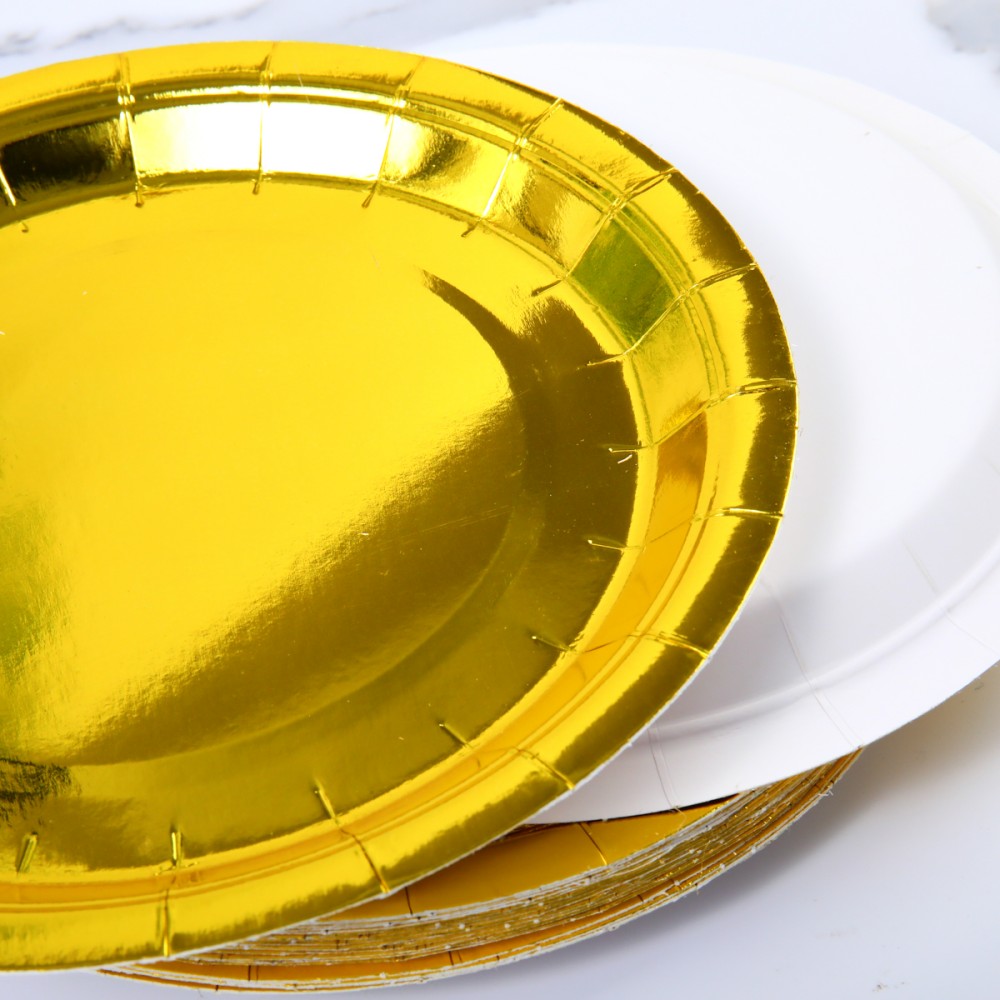
Catalogue stack reference only; request the actual proposed packing orientation and contact arrangement.
Identify the selected plate and the proposed pack
Miaoteng Paper lists a Shiny Gold Disposable Party Tableware Set with plate, cup and napkin components. Its official plate gallery includes a close view of gold-coloured faces and pale undersides in a stack. This offers a specific reference for asking about plate packing, while the photograph does not establish the contents or protective arrangement of an actual shipment.
Name the offered plate version and the pack being discussed. Ask the supplier whether its response describes a sample pack, an inner pack or another proposed unit. Keep the plate reference linked to the applicable quotation so that a general catalogue arrangement does not become an assumed specification for every offer.
Label the face, underside and rim references
Ask the manufacturer to identify the relevant plate surfaces in its proposed arrangement. A labelled picture or drawing can show which side is treated as the decorated face and how the underside and rim are referenced. The supplier should explain how neighbouring plates are oriented rather than leave the buyer to reconstruct a hidden stack from the visible top plate.
This is a packing relationship question. It does not replace a drawing of the individual plate profile or establish any thickness, coating or material from the image. Keep the description focused on the proposed contact between identified surfaces and any areas for which the manufacturer has not yet supplied an answer.
Product appearance reference; the image does not establish included separators or packing protection.
Ask what separates neighbouring plates, if anything
Request the supplier’s proposed contact arrangement in plain terms. If a separator, interleaf or other packing item is offered, ask where it sits and which surfaces it separates. If no such item is proposed, ask the manufacturer to state the actual arrangement. Do not add an assumed protective sheet or wrapping material simply because a buyer would prefer one.
Where the buyer requests a change, describe the requested arrangement separately from the supplier’s current proposal. Ask what is offered and what the quotation includes. A request for additional packing does not establish that the item is available, included in the price or suitable for the intended purpose; those answers must come from the actual supplier response.
Buying field
Requested supplier response
Selected plate
Supplier plate version and reference sample for the proposed pack.
Named surfaces
Decorated face, underside and rim references used in the packing description.
Neighbouring orientation
Manufacturer description of how adjacent plates sit in the proposed arrangement.
Separation items
Any supplier-offered interleaf, separator or other component, with its position identified.
Pack evidence
Identified sample or drawing that represents the quotation and any later revision.
Connect the arrangement to an identified sample
If a pack sample is supplied, ask the manufacturer to identify which proposal it represents. Retain its relationship to the selected plate and the supplier’s packing description. A photograph of an opened sample can support a discussion when it is clearly identified, but an unrelated catalogue image should not substitute for the offered arrangement.
Record a review comment against a named surface or packing position. An unclear orientation, an unconfirmed separator or a different plate version needs a specific response. Keep observations about the sample distinct from any broader claim about resistance to scuffing or damage. A packing arrangement alone does not verify such a result.
Different cup component; its nesting or coating is not transferred to the plate packing proposal.
Keep cup nesting and plate packing distinct
The coordinated gold tableware gallery also shows cups. Their nested presentation provides context for the product family, but it does not define how the plates are packed. Ask for the arrangement of the actual plate unit instead of transferring a cup stacking description to a different component.
The same distinction applies when a brand purchases several decorative styles. A gold-coloured plate proposal should remain linked to its own offered surface and sample reference. If a supplier uses a common packing method across styles, request its stated applicability rather than assuming that every finish and component follows the same arrangement.
Control changes through one pack reference
Keep the current contact arrangement with the quotation, selected plate and applicable sample. When a supplier changes a packing component or orientation, request an updated reference and identify what the new proposal replaces. This helps a buyer compare the actual offered arrangements without confusing an earlier discussion with a confirmed current specification.
Commercial quantities, shipping terms and any required product evidence remain separate supplier responses. This article provides no fixed pack count, inspection tolerance or damage-prevention guarantee. Its purpose is to make the physical contact arrangement clear enough for the parties to identify the next question and preserve any unresolved requirement before ordering.
Buyer FAQ
Does a catalogue stack prove the shipped arrangement?
No. Ask the supplier to identify the actual pack proposal and the sample or drawing that represents it.
Should a separator be assumed between gold plate faces?
No. Request the manufacturer’s proposed arrangement and confirmation of any separation item that is offered.
Does the contact map verify scratch resistance?
No. It describes the arrangement. Any surface-performance evidence needs its own defined product and evaluation scope.
What should purchasing keep?
Keep the plate reference, named surfaces, neighbouring orientation, confirmed packing components and matching pack sample under one identifiable version.
Refer to the Shiny Gold tableware page, use the supplier sourcing blog for wider context and request the proposed plate contact arrangement.
Identify the actual plate and proposed packing unit.
Label neighbouring surfaces and any offered separator.
Retain the current arrangement with its matching sample.
wholesale shiny gold disposable party tableware setsB2B supplier sample record