
Gold-Dot Plates: Define the Surface Check
For a gold-dot paper-plate surface-check RFQ, identify the actual offered plate, printed side and decoration version, then request the manufacturer-defined handling or rubbing-check scope. Ask for the proposed contact conditions, method reference and reporting format. Keep the recorded observations separate from any acceptance decision, and do not transfer a cup record to a plate without a specific applicability statement.
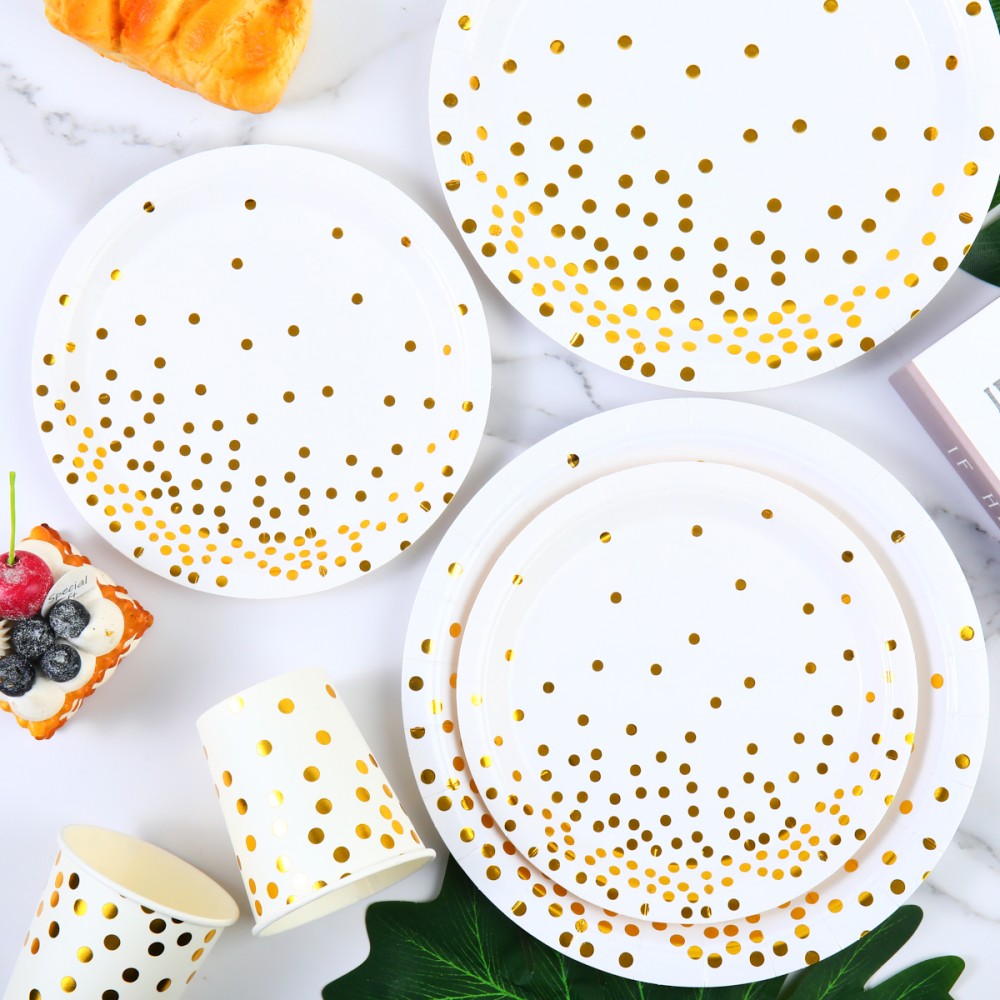
The official Classic White & Gold Polka Dot Disposable Party Tableware Set provides a catalogue starting point for the inquiry. Its plate and cup photographs identify visible decoration, but a still image cannot show the result of handling or contact. A useful supplier request explains which printed plate surface is being discussed and what evidence the proposed check is intended to provide.
Catalogue print-appearance reference; no resistance to rubbing or handling is established by this photograph.
Identify the plate sample behind the request
Start with the selected plate component from the offered tableware set. Ask the supplier to identify the actual plate version, decoration reference and sample used for its response. Keep the component reference distinguishable from the general set name. A tableware-family description may cover several components, while the buyer question concerns a particular printed plate surface.
Request an identifiable photograph or other sample reference showing the side and area covered by the proposed check. Where the supplier uses a drawing or artwork reference to identify the gold-dot decoration, retain its revision with the sample record. The reference should describe the offer under discussion rather than rely on a visually similar plate from another catalogue presentation.
Ask the manufacturer to define the check scope
Describe the purchasing concern as a question about the printed surface during the relevant handling context. Ask the manufacturer which method or documented check it proposes for the actual offered sample and what that method is intended to assess. Retain the supplier explanation so that a later reader can distinguish the requested subject from a broad statement that the surface has been checked.
Ask the supplier to state the applicable conditions and any limits of its proposal. If it refers to an internal method or another document, request the reference and revision rather than inventing a procedure from the catalogue picture. The buyer inquiry should obtain the manufacturer-defined scope before a sample observation is described as answering a particular purchasing requirement.
Buying field
Requested supplier response
Plate identity
Offered component reference, decoration version and identified sample.
Surface location
Printed side and marked area covered by the supplier proposal.
Check purpose
The specific handling or contact question the manufacturer method is intended to address.
Method and conditions
Supplier-defined reference, applicable contact conditions and stated limitations.
Observation record
Identified sample, documented conditions and clearly described observations.
Decision scope
Separately stated acceptance basis and the product version to which the decision applies.
Separate plate view for identifying the printed surface discussed with the supplier.
Request a record that preserves what was observed
Ask how the supplier will identify the sample and report the check. The record should connect the observations to the stated method and conditions. Where the supplier provides photographs, ask for the relevant sample and surface area to remain identifiable in the record. Images can support the description, but an unexplained picture should not replace the supplier account of what was done and observed.
Keep the original observation wording visible when discussing the outcome. If a supplier record says only that the appearance was reviewed, ask what that statement covers. If a contact-related change is reported, request its location and the supplier description rather than assigning an unsupported category. The aim is a traceable explanation that can be compared with the original question, not a result inferred by the buyer from an unclear record.
Separate observations from the acceptance basis
Ask the supplier to distinguish its recorded observations from any proposed acceptance criteria. The buyer should know whether a conclusion follows a defined requirement or is simply the supplier assessment of that sample. Keep the relevant criterion or purchasing requirement identifiable. A statement that a check was completed does not by itself explain why the reported observation is acceptable for the buyer order.
Where the proposed method does not address the buyer concern, state the remaining question and request the manufacturer response. Do not fill the gap with an invented number of rubbing actions, contact force or pass threshold. Keep any further proposal tied to an identified method and scope. This lets the purchasing decision reflect the evidence actually supplied while preserving unresolved points as explicit questions.
Different cup component; any plate surface-check record needs separate applicability rather than automatic transfer.
Keep cup evidence and repeat-order scope distinct
The white gold-dot cup photograph above identifies a different component of the catalogue set. A similar decoration does not establish that a cup surface record applies to the plate. Ask the supplier to identify which component each record covers. If it proposes a shared record, request a clear explanation of applicability to the exact plate version instead of treating the set name as that explanation.
Before accepting the plate offer, link the quotation, sample reference and surface-check record. Keep any accepted method scope and decision reference with the order. For a repeat purchase or a changed decoration version, ask whether the earlier record remains applicable. A handling or rubbing observation is limited to its stated subject; it does not establish separate food-contact, chemical, environmental or other product-compliance results.
Buyer FAQ
Does a gold-dot plate photograph prove resistance to handling?
It identifies visible decoration. Request a manufacturer-defined check and a traceable record for the actual offered plate surface.
Should a buyer create a rubbing procedure from the catalogue image?
Ask for the manufacturer proposal, method reference and applicable conditions. The catalogue image does not define a procedure or an acceptance threshold.
Can a cup check be treated as a plate result?
Keep component identities separate. Request the supplier applicability statement for the exact plate if a shared record is proposed.
What should accompany the supplier conclusion?
Retain the sample identity, surface location, method and conditions, observed result and separately stated decision basis under clear references.
Use the official white and gold-dot tableware reference to identify the plate component, review the tableware catalogue and send the surface-check scope request through the supplier website.
Identify the actual plate, decoration version and printed surface.
Request manufacturer-defined scope and a traceable observation record.
Keep acceptance criteria and other component evidence distinguishable.
wholesale classic white and gold polka dot disposable party tableware setsB2B supplier sample record